The Lean Startup Methodology is an approach to developing products and businesses that minimises risk and increases the efficiency of the development process. This is an iterative process of testing hypothesis to validate the viability of the product for the intended market, and releasing incrementally improved versions of the product based on validated learning.
The Lean Startup approach works in conjunction with the Business Model Canvas, along with Lean, value Proposition and Mission Model Canvases. From the little knowledge that I currently have, it appears to incorporate Agile principles in developing a startup business and/or product that the market will help to develop, and consequently increase the likelihood of acceptance.
Gaining a better understanding of Lean Startup Methodologies, and further reading on the Business Model Canvas, should serve me well when it comes to developing my own startup, and so I will set myself a SMART goal:
Specific
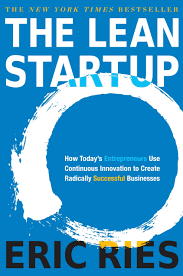
I will improve my understanding of the Lean Startup methodology by reading the book “The Lean Startup: How Constant Innovation Creates Radically Successful Businesses” by Eric Ries
Measurable
The course will improve my approach to building a digital startup, to reduce risk and increase the probability of launching a successful business.
Achievable
I have purchased a copy of the book and so the only other constraint that I have to consider is scheduling the time to read and understand it. As my current priority is to achieve proficiency with Flutter, I will delay this goal to run alongside the next module.
Relevant
My ultimate goal is to develop a startup digital business, and so the Lean Startup Methodology should prove highly valuable once I begin to work on this.
Time-Bound
I will have read the book by the 26th August 2019. With 16 chapters (including Introduction) I will commit to reading 1-2 chapters per week over the 12 week period of GAM730.
Many advocates of the Business Model Canvas argue that a business plan is redundant – a Business Model Canvas is all you need.
Steve Blank, Silicone Valley entrepreneur and “The Father of Modern Entrepreneurship”, sums this up with: “Business Plan: a document investors make you write, that they don’t read”.
Whilst I fully respect their superior credentials, I struggle to agree with the view that a business plan is unnecessary.
The Business Model Canvas is a hugely valuable tool, and presents a concise overview of your business intentions, but a business plan allows for elaboration and emphasis, depending on the purpose of the plan. The Canvas is a good tool for communicating your business model, but it needs to be explained in order to be understood, whereas a business plan should speak for itself and can be sent to the reader to digest prior to any further discussion.
I have worked with a few (non-tech) startups, and my first piece of advice is to start at the very end – establish your exit strategy. At what point do you leave the business, how will you leave, and why? Do you just want to create a personal income for the few years up until your children start school and you can resume your career? Do you want to sell the business as a going concern with a certain price tag and at a certain time? Do you want to float the business as a PLC? Do you want to hand the business over to your children? Is this your early retirement pension generator? Are you aiming to impact a social cause? This thinking provides purpose, context, an ultimate long-term objective to work toward, and helps them to see that the business plan is a significant subset of of their life plan, and that the two MUST be congruent.
I will then recommend the business plan guidance from The Prince’s Trust. It offers a good structure to build a comprehensive plan. Of course, it might be necessary to produce more than one version of the plan, with each tailored to its intended audience. For example, if you are building the plan for your own (and perhaps your team’s) direction and control purposes, you might want to emphasise the operational processes and the key performance indicators against which you will measure performance. On the other hand, if you are submitting a version of your plan to win investment, your plan is essentially a sales tool and so your emphasis should be more geared towards the financial health of the business, what an investor can expect in return, risk analysis, detailed financial forecasts (including forecast profit & loss accounts and balance sheets), return on investment calculations and ratio analysis – all to convince them that your business is a good and safe investment proposition for their money.
Too many fantastic ideas never become anything more than that. In many cases, that’s because the originator doesn’t have the know how, and/or resources, to turn it into a product. Similarly, too many great products fail before hitting the market. It is all too common that the originator assumes that they have a product, and therefore, they have a business. The product may be the business’s raison d’être, but it isn’t the business. There are so many other factors to consider in order to deliver value to the customer. Long before the product exists, and maybe even as early as the concept development stage, a business model is required.
A business model describes the core strategy for achieving your (financial and non-financial) business objectives under the current and predicted market conditions.
An alternative definition :
A business model describes the rationale of how an organisation creates, delivers and captures value.
Book: “Business Model Generation”, by Alexander Osterwalder & Yves Pigneu
The business model is not a static declaration. The first draft might be pure hypothesis, and form the basis for market research to test those assumptions, and perhaps a number of strategic options, with amendments made until there is confidence in the chosen way forward. The business model should be revisited frequently, to evaluate strategic options, particularly as the product advances along the curve of it’s lifestyle, or when significant changes in internal and/or external factors are experienced or predicted.
Around a year ago, I became aware of Alexander Osterwalder’s Business Model Canvas. The canvas is an excellent tool for brainstorming, mapping, communicating, understanding, discussing and testing strategic options.
The canvas is a single page framework of nine segmented areas of your business, that provokes analysis, in order to build an overview of how the distinct elements of your business work together to deliver value for your consumer, and achieve competitive advantage.
It’s a good idea to start the process by establishing a clear purpose for the business, to guide your thinking. This could include the purpose for building your product, what you want to achieve along the way, or how it fits into your own life plan. For example the purpose for my Quick Cook Challenge app might be:
I want to reduce the current levels of reliance on takeaway and convenience foods by providing a platform for sharing quick and easy home made recipes. The app needs to provide an income for myself over the next 5 years, when it will reach a state of maturity to enable me to find a buyer for the business and realise a value of £2 million.
With a clear purpose in mind, completing each section can be deliberated with the desired outcome as a guide. The sections can be tackled in any order:
Key Partners
Who are the external supporters that you will be relying on to help deliver value to your customer and achieve your goals? Suppliers, agents, contractors, sponsors etc.
Key Activities
What are
the main processes and tasks that you will need to perform in order to deliver
value?
Key Resources
What are
the essential items of equipment, people, intangible assets etc. that the
business needs to operate?
Value Propositions
What
consumer issue are you intending to address? What pain are you going to ease?
What problem are you going to solve? What is the base reason that someone will
pay for your product?
Customer Relationships
Is this a single purchase relationship with your customer, or do you want to build a relationship to foster repeat purchases? This section is all about how you intend to keep in touch with your customer base and build brand loyalty. It could also include referral programmes where existing customers are incentivised to recruit new customers for you.
Channels
This is
where you construct your marketing funnel. The process through which you will
first contact a consumer and move them through the funnel to become a buyer.
This will also include and sales and delivery channels that you intend to use
to get your products into their hands, if applicable.
Customer Segments
The
market segments that you intend to appeal to, with a description and typical
characteristics of each segment.
Cost Structure
What are the major cost drivers for the business. This section should establish the nature of the costs (fixed, variable, semi-variable, economies of scale achievable, break-even point etc)
Revenue Streams
For each product or service that you offer, build your pricing strategy, estimate how frequently each customer might buy, their average spend per purchase, and any discounting that might be applied.
Once all of these categories have been completed, each should be cross-referenced with each of the others, to identify how they affect each other, and work together. For example, considering the value proposition along with the customer segments will help to concentrate on what features your product needs in order to provide value for each of your market segments (product-market fit). Or considering key activities along with cost structure, you might decide to investigate the cost/benefits of outsourcing some of these activities.
Getting your business model right is by no means an easy exercise, but it could provide the USP that makes your business a success.
Building a business model canvas for your competitors, comparing and contrasting each element, along with market research to support your findings and assumptions, is another very powerful tactic for optimising your business model for superior value delivery and competitive advantage.
While I appreciate the concept of the Business Model Canvas, I intend to do some further reading around the subject in order to deepen my understanding and learn of further tactics to develop the perfect business model.
Week 6 is focused on some commercial aspects of app development. This is the area that I am currently most comfortable with as I have plenty of practical experience, although, not within a digital technology context. Even so, the general principles are still very much applicable.
I have worked with several startups to help them to develop their business plans, and also been the financial modelling lead on a wide range of large-scale tender proposals on the supplier side – the largest being the Trusted Borders consortium’s winning bid for the e-Borders contract with The Home office (which unfortunately collapsed during implementation). I have also built cost of ownership and whole life costing models for a variety of major asset (planes, helicopters, tanks and ships etc.) supply chain transition projects for The Ministry of Defence.
This all valuable experience, but I have identified a number of commercial areas that I would like to pursue further in order to gain an alternative perspective (particularly from a digital startup point of view), deepen my current level of understanding, and improve my general commercial capabilities. This should prove to be a highly valuable investment of time when I come to begin developing my intended app-based startup.




 My Journey to App Success